info@siking.com

Tooling & Mold Making

In-house CNC machining — DFM analysis, MoldFlow simulation, 8,000+ historical moulds

Home/ Capabilities/ Tooling
Tooling Capability

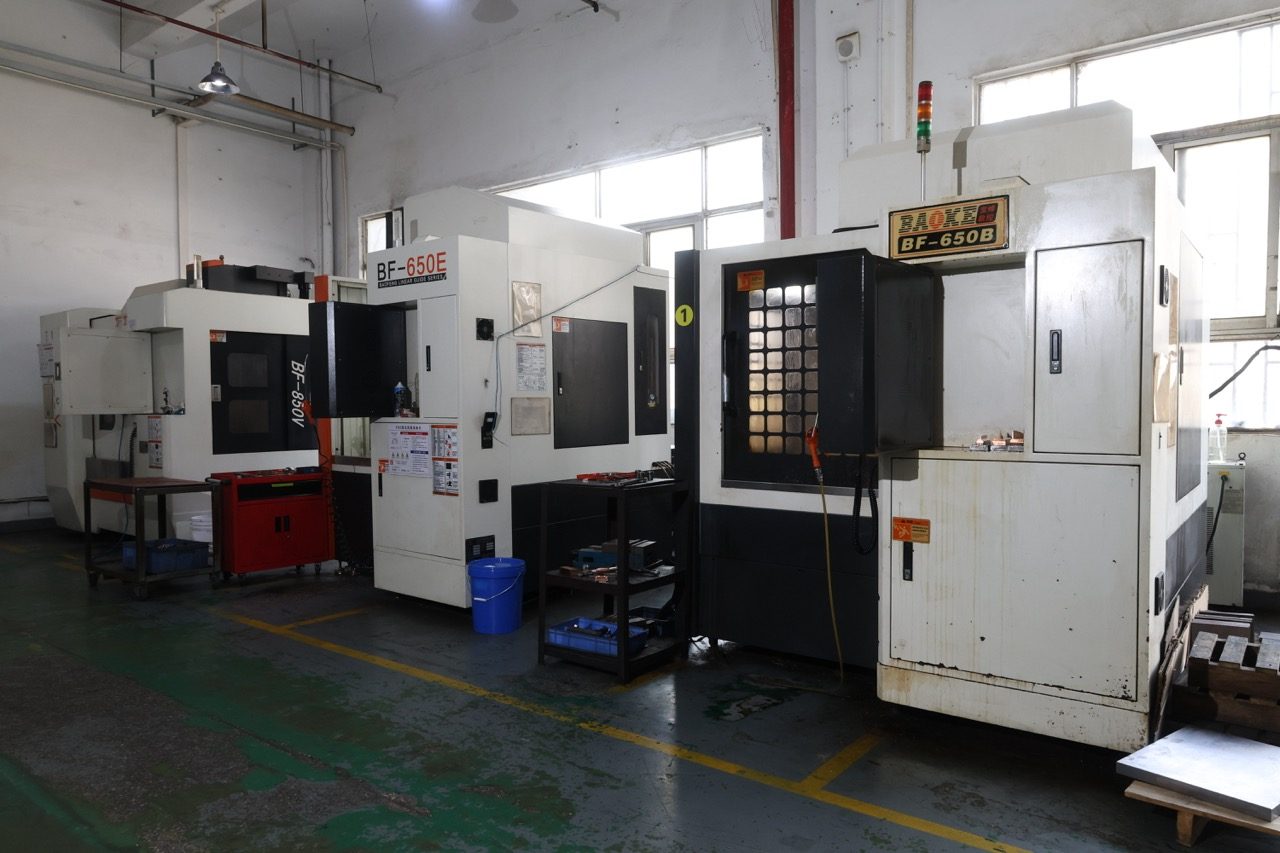
In-House Mold Making

SIKING's tooling capability covers the full mold lifecycle — from DFM analysis and MoldFlow simulation through CNC machining, trial production, and production mold handover. Molds are designed and machined in-house, not outsourced to a third-party toolmaker.

In-house tooling control means the engineering team that designs the mold is the same team that will run production. Design decisions — gate location, parting line, ejection strategy, steel grade — are made with production quality and mold life in mind, not just first-part appearance.

  • In-house CNC machining centre — sample and production molds produced on-site
  • DFM (Design for Manufacturability) analysis before any tooling commitment
  • MoldFlow simulation for fill analysis and weld line prediction
  • Steel options: 55# steel, P20 steel, or customer-specified grade
  • Sample molds: 100×100mm to 200×200mm
  • Production molds: 300×300mm to 500×500mm
  • Automatic mold life monitoring: alert triggered at 300,000 shots
  • 8,000+ historical moulds on record
8,000+
Historical moulds
300K
Shot life alert threshold
In-house
CNC machining
CNC Machining Centre
Tooling Specifications

Mold Making Parameters

ParameterSpecification
MachiningIn-house CNC machining centre
Steel Options55# steel, P20 steel, customer-specified grade
Sample / Prototype Mold Size100×100mm to 200×200mm
Production Mold Size300×300mm to 500×500mm
Mold Life MonitoringAutomatic alert at 300,000 shots
Surface TreatmentsSandblasting, texturing, plating, mirror polish
DFM AnalysisIncluded — required before tooling commitment
MoldFlow SimulationAvailable for fill analysis, weld line, and gate optimisation
Historical Mould Record8,000+ moulds on record — design library for repeat geometries
Lead Time — Sample Mold7–10 business days
Lead Time — Production Mold15–25 business days
Engineering Value

What In-House Tooling Control Delivers

DFM Before Commitment

SIKING reviews every design for manufacturability before cutting steel. DFM identifies tolerance-risk geometry, undercuts that require side-pulls, wall sections that will cause short shots, and parting line positions that affect cosmetic appearance. Problems caught at DFM are free to fix. Problems caught after tooling is cut cost real money — and time.

Mold Life Monitoring

SIKING tracks shot counts on production molds. At 300,000 shots, an automatic alert triggers a mold inspection review. This is not a manual process — it is built into the production tracking system. For customers running long-term programmes, this means proactive maintenance rather than mold failure during a production run. You know when the mold is approaching its service life before it becomes a delivery problem.

8,000+ Historical Moulds

36 years of tooling history means SIKING has seen most common silicone part geometries before. For repeat or similar geometries, the design library reduces engineering time and improves first-shot accuracy. This is especially relevant for standard keypad layouts, O-ring cross-sections, and common gasket profiles.

Process Flow

Tooling Development — Step by Step

1

DFM Review

Engineering team reviews drawing or 3D model. DFM report identifies risk areas, tolerance feasibility, and recommended process selection. Customer approval before tooling starts.

2

Design & Simulation

Mold design in CAD. MoldFlow simulation for fill analysis, weld line locations, and gate position optimisation where specified.

3

CNC Machining

Mold machined from selected steel grade (55#, P20, or customer-specified). Surface treatment applied per specification.

4

Trial Production

T1 samples produced. Dimensional report against drawing. Customer approval of first-article samples. Tool modifications if required.

5

Mold Handover

Mold qualified for production. Shot counter initialised. Mold stored on-site under SIKING's custody. Life monitoring active.

Steel & Surface Options

Steel Grades and Surface Treatments

Steel selection and surface finish matched to production volume, part geometry, and surface requirement.

Steel Grade Options

  • 55# steel: Standard carbon steel — good for short-to-medium production runs. Lower cost, adequate hardness for most silicone applications.
  • P20 steel: Pre-hardened tool steel — better wear resistance, suitable for longer production runs and tighter dimensional stability.
  • Customer-specified: Other steel grades accommodated — specify your requirement at DFM review.

Surface Treatment Options

  • Sandblasting: Matte textured finish — reduces surface gloss on moulded part.
  • Texturing: Controlled surface pattern for grip or cosmetic effect — specify texture type and depth.
  • Plating: Hard chrome or other plating for cavity wear resistance and easier demold.
  • Mirror polish: Optical finish for high-gloss cosmetic surfaces or optical-clarity requirements.

Best Suited For

  • New part development requiring DFM-first approach before any tooling cost
  • Production programmes where mold life monitoring is needed for long-term supply security
  • Parts where surface finish (mirror, texture, sandblast) is a defined specification
  • Customers who want tooling produced by the same team running production — no separation of toolmaker and moulder
  • Programmes involving repeat or similar geometries where historical mold library reduces engineering cost

Not Suited For

  • Very large molds exceeding 500×500mm production size — confirm requirements at RFQ
  • High-speed production tooling requiring hot runner systems or high-cavity-count configurations designed for maximum throughput — discuss at DFM review
  • Tooling for processes SIKING does not run in-house — mold design is tied to SIKING's specific process parameters
Common Questions

Tooling — FAQ

Who owns the mold — SIKING or the customer?
+
The mold is the customer's property, as specified in the tooling agreement. SIKING stores the mold on-site and maintains it under the mold life monitoring system. If the customer wishes to transfer production to another supplier, the mold can be released — this is governed by the terms of the tooling agreement signed at programme start. SIKING does not use customer tooling for other customers.
What happens when the mold reaches 300,000 shots?
+
At 300,000 shots, the system triggers an alert and a mold inspection is conducted. The inspection assesses cavity wear, parting line condition, ejector pin wear, and cooling channel integrity. Based on the inspection, SIKING recommends one of: continue production (if wear is within tolerance), scheduled maintenance (if wear is approaching critical threshold), or mold replacement (if cavity dimensions are no longer within specification). The customer is notified of the inspection result and recommendation. Production does not automatically stop at 300,000 — the alert triggers review, not shutdown.
Is MoldFlow simulation included in the standard tooling quote?
+
MoldFlow simulation is available and is specified on a case-by-case basis — typically for complex multi-cavity tools, parts with thin-wall sections where fill balance is critical, or geometries where weld line placement has structural implications. For standard single-cavity tools with straightforward geometry, MoldFlow may not be required. This is discussed at DFM review and quoted accordingly. If you have a specific fill concern or weld line constraint, flag it at the RFQ stage.

Start with DFM — Before Cutting Steel

Send drawings or 3D models for DFM review. Engineering feedback and tooling quotation within 3–5 business days.