info@siking.com

Secondary Processing

Printing, coating, laser etching, dispensing, and assembly — from molded part to finished goods

Home/ Capabilities/ Secondary Processing
Capability Overview

Full-Chain Secondary Processing

Most silicone contract manufacturers stop at molding. SIKING's secondary processing capabilities extend the programme to finished goods — printed, coated, etched, assembled, and packaged for shipment.

The commercial implication: programmes that would otherwise require a separate printing vendor, a separate coating vendor, and a separate assembly operation can be handled in-house. Fewer handoffs means fewer quality risks, shorter lead times, and a single point of accountability for the finished product.

  • Screen printing: front multi-colour, back-side printing, conductive inks (carbon pill, silver)
  • Pad printing: curved-surface printing, multi-colour pad printing
  • Class 100K cleanroom spray coating: PU coating, soft-touch paint, wear-resistant coatings
  • Laser etching: translucent backlighting windows, logo marking, parameter engraving
  • Dispensing: machine dispensing and pre-formed insert embedding
  • Assembly: adhesive bonding, thermal welding, ultrasonic welding, terminal crimping
  • Plating: via disclosed qualified partner
Class 100K
Cleanroom coating
6
In-house process types
Ship-ready
Finished goods output
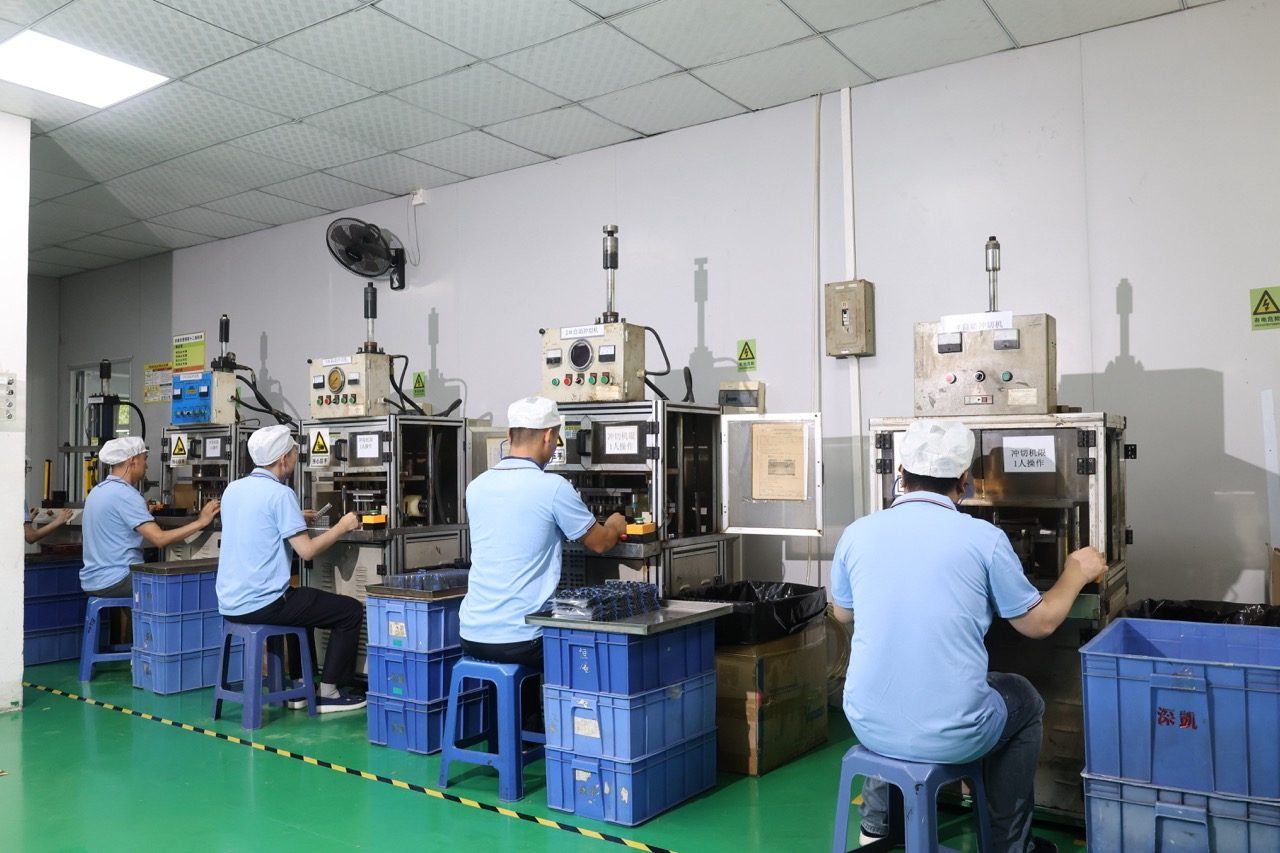
Secondary Processing Floor
Process Capabilities

Secondary Processing — In Detail

Screen Printing

Front-face multi-colour printing for silicone keypads and panels. Back-side printing for legend and conductive layers. Elastic ink printing for stretchable surfaces. Conductive ink options: carbon pill (carbon contact layer beneath legends for electrical contact), silver ink (higher conductivity, used where carbon resistance is too high).

Applications: remote control keypads, medical device panels, industrial control panels.

Pad Printing

Curved-surface printing on silicone, plastic, and composite parts. Pad printing transfers ink from an engraved plate to the part via a silicone pad — the pad conforms to curved surfaces. Used for logo marking, branding, and parameter legends on non-flat geometries.

Applications: curved keypads, cylindrical components, moulded grips with surface marking.

Class 100K Cleanroom Spray Coating

PU coating, soft-touch paint, colour coatings, and wear-resistant coatings applied in a Class 100,000 cleanroom. The controlled environment eliminates airborne dust contamination during the coating wet stage — critical for medical components and electronics with cosmetic surface requirements. Most small factories cannot maintain cleanroom conditions for spray coating.

Applications: medical device housings, electronic keypads requiring dust-free surface finish.

Laser Etching & Marking

Laser engraving creates translucent windows in silicone keypads for backlit LED illumination — removing the opaque top layer to expose the transparent silicone beneath. Also used for permanent parameter marking, logo engraving, and QR/barcode integration on silicone and plastic surfaces. Laser depth is controlled per specification.

Applications: backlighted keypads, permanent marking on medical devices, traceability marking.

Dispensing & Potting

Machine-controlled dispensing of adhesives, sealants, and potting compounds. Pre-formed insert embedding into dispensed channels. Wear-resistant and corrosion-resistant finish options. Automated dispensing ensures consistent bead geometry and volume — reducing the rework rate from manual application.

Applications: sealed connectors, potted electronics, gasket-on-frame assemblies.

Assembly & Packaging

Adhesive bonding, thermal welding, ultrasonic welding, and terminal crimping. Parts assembled to customer specification and packaged ship-ready. Full assembly in-house eliminates the assembly vendor link in the supply chain — reducing lead time, logistics cost, and the quality risk of a separate assembly process.

Applications: composite keypads with PCB sub-assemblies, silicone + plastic assemblies, retail-packaged components.

Qualified Partner

Plating

Electroplating and surface plating services are provided through a disclosed qualified partner. SIKING coordinates the plating process as part of the overall programme — parts are transferred to the partner facility under a controlled handoff process and return to SIKING for final inspection and packaging. The partner is disclosed to customers on request. No hidden subcontracting.

Best Suited For

  • Finished goods requiring decoration: printed legends, branding, colour coding
  • Keypads and panels with backlit windows (laser etching through silicone)
  • Medical and electronics components requiring dust-free surface finish (cleanroom coating)
  • Conductive printing programmes: carbon pill keypads, silver ink conductive layers
  • Assemblies requiring bonding, welding, or potting as part of the finished product
  • Programmes where finished goods delivery (not just moulded parts) is the requirement

Not Suited For

  • High-gloss Class A automotive surface finishes — this is not the application scope of SIKING's coating capability
  • Large-format structural printing — screen printing is configured for keypad-scale parts
  • Decorative anodising — this is a specific aluminium process; plating via qualified partner covers standard electroplating
  • Parts where secondary processing adds no functional value — evaluate whether the finish is needed before specifying it
Common Questions

Secondary Processing — FAQ

Why does cleanroom spray coating matter for electronics and medical parts?
+
Spray coating applies a liquid film that must cure to a smooth, defect-free surface. If airborne dust particles settle on the wet coating before cure, they are permanently embedded — creating cosmetic defects and potentially compromising surface function (e.g., a coating crack over a membrane seal). Class 100,000 cleanroom conditions reduce the particle count in the spray environment, minimising this contamination risk. For medical device housings and electronics components with appearance specifications, this is not optional — it is the process control requirement.
What is a carbon pill, and when is it used?
+
A carbon pill is a conductive layer printed on the underside of a silicone keypad key. When the key is depressed, the carbon pill contacts a conductive trace on the PCB beneath, completing the circuit. Carbon pill printing is a standard requirement for silicone remote control and panel keypads that use membrane-switch style PCBs. Silver ink provides higher conductivity and lower contact resistance — specified where carbon pill resistance is too high for the circuit design.
Can SIKING deliver fully assembled, packaged, and labelled goods for direct distribution?
+
Yes. SIKING's assembly and packaging capability supports finished goods delivery — parts assembled, tested, packaged in customer-specified packaging (blister, bag, box, reel), and labelled for shipment. This is common for programmes where SIKING is the single manufacturing partner and the customer receives goods ready for distribution or sub-assembly integration. Packaging specification is confirmed during the programme setup phase.

From Moulded Part to Finished Good

Send your specification — printing, coating, laser, assembly requirements. SIKING handles the full post-mould chain.