Overmolding
Silicone bonded to plastic or metal within one coordinated programme
Multi-Material Composite Molding
Overmolding combines silicone with a plastic or metal substrate as one programme rather than separate part and assembly handoffs. The fit between substrate, bond method, and downstream inspection is defined during DFM.
SIKING reviews overmolding routes across in-mold forming, adhesive assembly, and thermal or ultrasonic joining. Where the substrate is plastic, the in-house 80-400T window is confirmed early so routing is clear before tooling or launch.
- Silicone-on-plastic and silicone-on-metal assembly support
- In-mold, adhesive, and thermal or ultrasonic bond routes reviewed case by case
- Bond method confirmed during DFM
- Plastic substrate scope reviewed against the in-house 80-400T window
- Inspection plan aligned with substrate fit and bond requirements
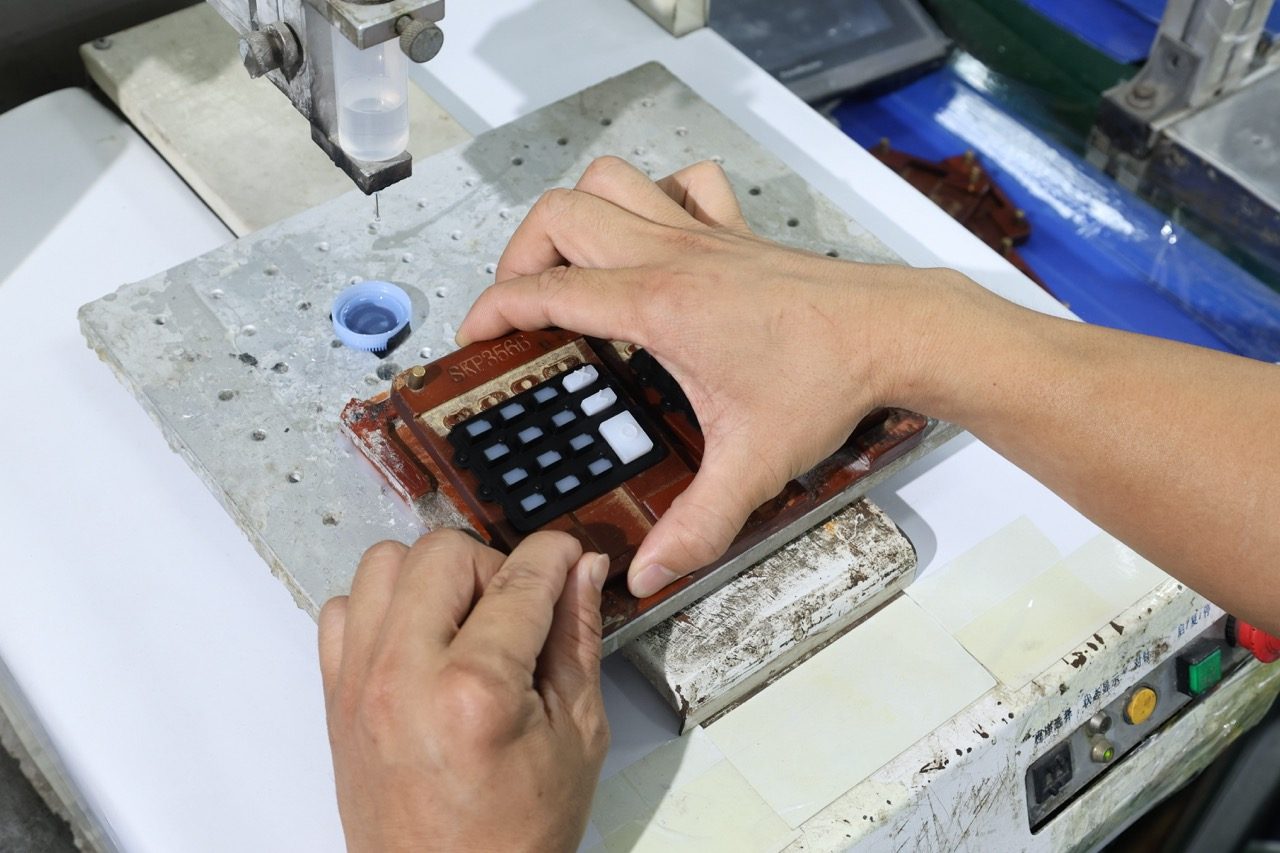
Three Bonding Methods — Matched to Application
SIKING selects the bond route based on substrate fit, performance target, and production plan.
In-Mold Forming
The substrate is placed in the mold before silicone is formed around it. This route is used when the design needs a direct bond without a separate adhesive step.
Best for: high-bond-strength requirements, sealed electronics, waterproof assemblies.
Adhesive Assembly
Silicone is bonded to the substrate after molding. This route fits programmes where in-mold forming is not practical or the substrate arrives as a finished part.
Best for: ergonomic grips, covers, flexible sealing elements bonded to rigid housings.
Thermal / Ultrasonic Welding
Thermal or ultrasonic joining is reviewed for compatible assemblies that need a permanent bond without adding adhesive.
Best for: high-volume assembly, plastic-to-plastic bonds, encapsulated assemblies.
Overmolding matters because it reduces handoffs before defects do
This page works best when it frames the operational gain clearly: one RFQ, one owner, and one inspection path across silicone, substrate, and assembly scope.
That keeps the emphasis on coordination risk and launch clarity rather than unsupported cost math.
What the multi-vendor model costs you
- Separate qualification for substrate, silicone, and assembly vendors
- More handoffs and blurred ownership when defects surface
- Added logistics and schedule coordination between suppliers
What SIKING consolidation delivers
- One RFQ and one commercial owner for the assembly scope
- Plastic substrate review within the in-house 80-400T window when applicable
- Bond route and inspection plan aligned before launch
- Fewer supplier handoffs across the build
In-Mold Overmolding — Step by Step
Substrate Preparation
Incoming or in-house substrate is checked for fit, condition, and bond-route readiness.
Insert Placement
The part or insert is positioned in the tool or assembly fixture before molding or joining begins.
Bond Route Execution
Silicone is molded or joined using the approved in-mold, adhesive, or thermal route.
Bond Verification
Bond and fit checks follow the agreed first-article and in-process plan.
Assembly & Inspection
Secondary processing and final checks are completed before pack-out.
Best Suited For
- Silicone-on-plastic or silicone-on-metal assemblies
- Sealed interfaces and bonded control components
- Programmes that need bond route and substrate review in one RFQ
- Assemblies where fewer supplier handoffs reduce coordination risk
- Composite builds that may use the in-house 80-400T plastic window
Not Suited For
- Single-material silicone parts with no substrate requirement
- Applications that need easy post-bond disassembly
- Very large plastic substrates outside the in-house 80-400T window without confirmed routing
- Assemblies where the bond itself is not functionally necessary
Overmolding — FAQ
Discuss Your Overmolding Programme
Send drawings and substrate details. SIKING reviews bond route, fit, and inspection scope at quotation stage.